
 国际站
国际站 
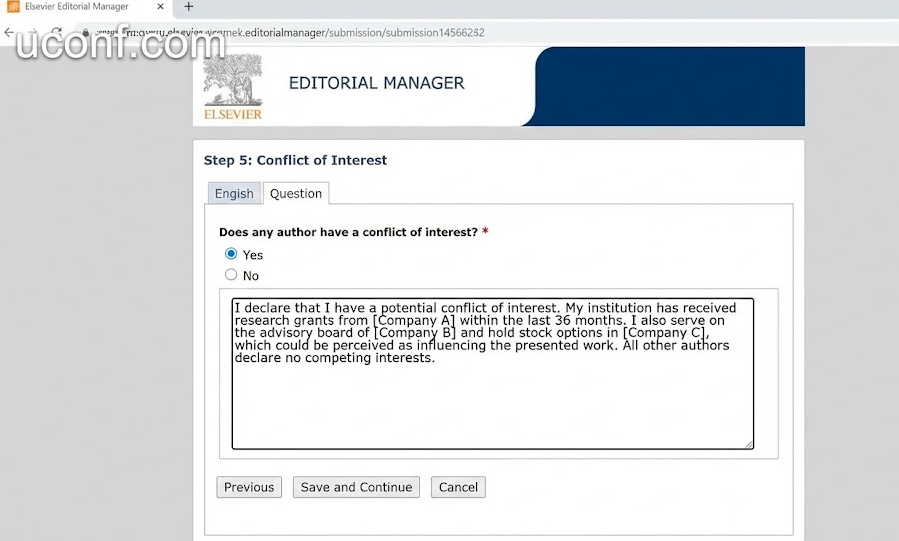
在论文投稿的最后一步,你一定会在系统里(或手稿末尾)看到这一栏: "Conflict of Interest" 或 "Competing Interests"。
很多作者会下意识地直接勾选 "No",或者从别人文章里复制一句 "The authors declare no conflict of interest."。 且慢!利益冲突声明不是走过场。 在 2026 年,随着学术透明度的提升,隐瞒利益冲突(哪怕是无意的) 可能导致严重的学术不端指控,甚至撤稿。
本文教您正确理解 COI,并提供全场景的 英文撰写模版。
一、 什么是利益冲突?它包括什么?
简单来说,当任何“次要利益”(如钱、名声、关系)可能影响你对“主要利益”(科学真实性)的判断时,就构成了利益冲突。
注意:声明利益冲突 ≠ 承认有错。 它只是为了透明 (Transparency)。只要你公开了,审稿人和读者自会判断这是否影响了你的结论。
COI 的三大类别:
- 财务利益 (Financial):最常见。包括:
- 课题资助 (Grants)
- 公司顾问费/讲课费 (Consulting fees)
- 持有股票/期权 (Stock ownership)
- 专利申请 (Patents)
- 职业关系 (Professional):
- 你是某期刊的编委 (Editorial Board Member)。
- 你和审稿人是同一个实验室出来的。
- 个人关系 (Personal):
- 作者之间是亲属/配偶关系。
二、 场景一:最常见 —— “我没有利益冲突”
如果你的研究是纯学术的,没拿公司的钱,也没申请专利,跟谁都没瓜葛。请使用以下 “无申报 (None Declared)” 标准模版:
- 标准版 (Standard):
"The authors declare no conflict of interest."
- 详细版 (Detailed):
"The authors have no relevant financial or non-financial interests to disclose."
- 竞争利益版 (Competing Interests):
"The authors declare that they have no known competing financial interests or personal relationships that could have appeared to influence the work reported in this paper."
三、 场景二:有资助 —— “我拿了项目的钱”
只要你的研究用了基金(NSFC, NIH)或企业的钱,必须声明。
- 基金资助版 (Grants):
"This work was supported by the National Natural Science Foundation of China [Grant No. 123456]. The funders had no role in the design of the study; in the collection, analyses, or interpretation of data; in the writing of the manuscript; or in the decision to publish the results."
- 注:后面这句免责声明(funders had no role...)非常重要,证明资助方没干预你。
四、 场景三:商业关系 —— “我是公司顾问/股东”
这是最敏感的区域。如果你发的是医学、药学、AI 应用类文章,且涉及商业公司。
- 顾问/雇员版 (Employment/Consultancy):
"Author A is an employee of [Company Name]. Author B serves as a consultant for [Company Name] and receives an honorarium."
- 持股版 (Stocks):
"Author C owns stocks in [Company Name], which may benefit from the results of this study."
- 专利版 (Patents):
"The authors have a patent [Patent Number] pending/issued related to the methodology described in this paper."
五、 放在哪里?(Placement)
通常有三个地方需要填写或粘贴 COI 声明:
- 手稿正文末尾 (End of Manuscript):通常在 "References" 之前,"Acknowledgments" 之后。
- 投稿系统 (Submission System):在 CMT / ScholarOne / Editorial Manager 中,会有专门的 Checkbox 或文本框。
- 标题页 (Title Page):如果是双盲审稿,COI 可能会暴露身份,建议单独放在 Title Page 文件中。
六、 避坑指南:作者常犯的 3 个错误
- 混淆“致谢”与“利益冲突”:
- Acknowledgment 是感谢谁给了钱/帮助。
- COI 是声明这些钱/帮助没有收买我的良心。
- 策略:如果仅仅是拿了国家基金,通常写在 Acknowledgment 里,然后在 COI 里写 "No conflict" 即可(视期刊具体要求而定)。但如果是企业横向课题,必须在 COI 里写明。
- 隐瞒“潜在”冲突:
- 你觉得“这点小钱不影响我”,但读者可能不这么想。
- 策略:When in doubt, disclose. (拿不准的时候,就公开)。
- 遗漏“配偶”利益:
- 有些顶级期刊(如 NEJM, Lancet)要求声明配偶的财务状况(如果与本研究相关)。
总结
撰写 COI 声明的核心原则是:诚实 (Honesty) 和 透明 (Transparency)。
- 90% 的情况:直接复制 "The authors declare no conflict of interest."
- 涉及公司/专利:请务必详细列出,这是保护你学术声誉的盾牌。